Author: Chad Nantais

  • Growing from Within: Why Economic Gardening Beats Hunting

    Growing from Within: Why Economic Gardening Beats Hunting

    North America is in the midst of a grassroots revolution, and Kingsville can get on board or join the have-nots.

    As Strong Towns’ founder Charles Marohn explains, top-down approaches often prove rigid and ineffective, while bottom-up strategies encourage intelligent, complex, and truly adaptive growth.

    Institutional Failure

    This is what Dee Hock, the founder of VISA, observed about top-down approaches:

    “Command and control organizations are increasingly unable to achieve the purpose for which they were created. The very nature of these organizations alienates and disheartens the people caught up in them. They are increasingly unable to manage even their own affairs. We are experiencing a global epidemic of institutional failure that knows no bounds.”

    This insight hits home when we look at how our longstanding approach to local economics has left our municipalites running an endless loop of the Growth Ponzi scheme—essentially helpless to create significant quality of life gains for citizens. Just look at how Windsor and Essex County lead in all the wrong categories: poor physical and mental health, food insecurity, crime, bankruptcy, unemployment.

    International Trade Risks

    Yet we still keep dreaming up schemes that expose us to the wild uncertainties of international trade, with all its geopolitical tensions, supply chain disruptions, and economic fluctuations that we can’t control.
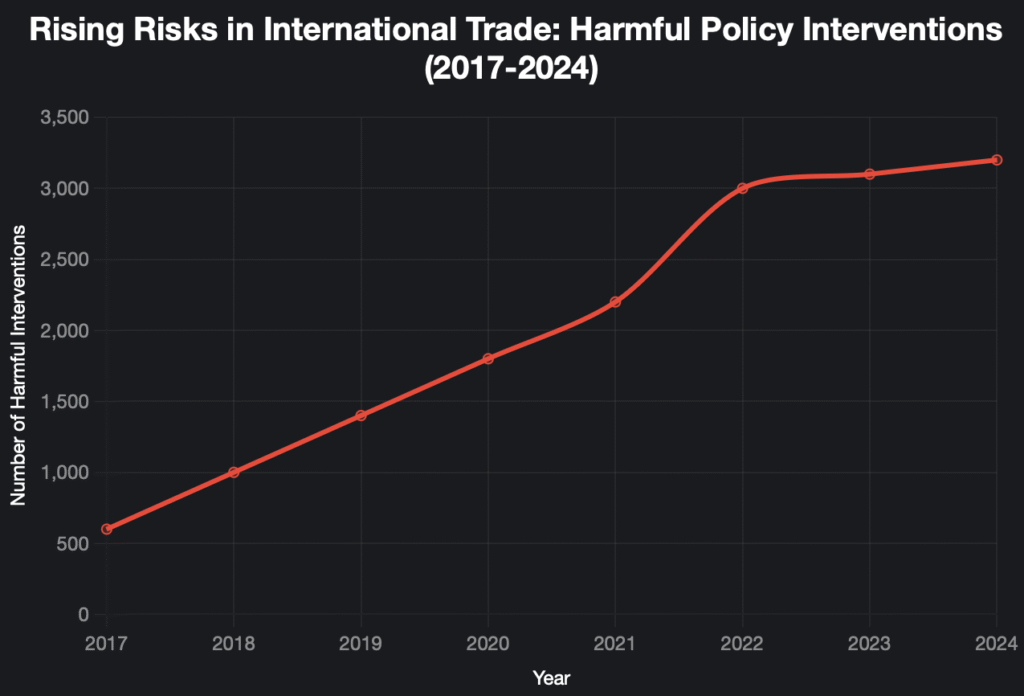
    From the Global Trade Alert via the World Economic Forum’s Global Risks Report 2025

    More Money Out Than In

    The key to a resilient local economy is not rocket science: ensure that more money is coming into our community than is going out. But in reality, we’re sabotaging this balance every day—whether by ordering products from online giants like Amazon, which siphons our dollars away, or by watching local governments chase after big corporations with generous tax incentives. Those companies often extract profits and ship them elsewhere, while their global commodities force our workforce into a relentless race to the bottom, undervaluing our people’s skills and potential.

    And as you can see from all the vacant storefronts in Kingsville, the challenges are even more acute: commercial leases have drifted far from our economic reality, making it nearly impossible for aspiring small business owners to get started amid high rates and inflexible terms. These barriers are stifling the very innovation we need.

    The Path to Prosperity

    Legendary Harvard Business Professor Clayton Christensen provided a roadmap for overcoming this: the real way to lift communities to prosperity isn’t through top-down subsidies or handouts, but by creating the right conditions for market-creating innovations—ideas born from locals to solve local problems, generating sustainable wealth that stays right here.

    This principle of locals solving local needs is what lifted several nations out of corruption and poverty to become economic superpowers. Examples include: South Korea, Singapore, and even the United States in the early part of the 20th Century.

    Economic Gardening

    This leads us to Chris Gibbons’ concept of “Economic Gardening,” which stands in stark contrast to the outdated “Economic Hunting” model, as detailed in this insightful Strong Towns blog post.

    Economic Hunting involves aggressively recruiting outside companies through a cutthroat competition of subsidies and incentives—it’s like going after big game, exciting in the moment but often yielding unreliable results with no guarantee of new jobs or long-term benefits. And in many cases, these mega-deals involve so many layers of dealmaking wrapped in NDAs that financial transparency goes out the window.

    Economic Gardening, on the other hand, is about nurturing what’s already in our soil: investing wisely in local businesses, leveraging our community’s unique assets to foster organic, high-return growth. It’s proven its worth in places like Florida’s statewide program, which delivered an impressive 9:1 return on every dollar invested.

    This approach is core to building a robust local economy and embodies the Strong Towns principle of focusing on neighborhoods and incremental improvements rather than chasing silver-bullet projects. Granted, a kiosk that sells iPhone cases, or a shawarma stand may not be as glamorous as a ground-breaking photo op for a 100-acre facility, but get enough of these small businesses going, and you have a resilient economic base without putting all your eggs in one basket.

    Economic gardening has endured for millennia worldwide, outlasting the top-down schemes of our modern age. From ancient Mesopotamian markets to medieval European guilds, this bottom-up approach can’t be beat. Across Europe’s cities—Ukraine and Romania’s resilient markets, Italy’s workshops, the startup hubs of Berlin and Budapest—I saw its strength. In Belgrade, Serbia, my home for seven years, 2,300-year-old neighborhood bazaars and family businesses sustained the economy through the 44 times the city has been destroyed and rebuilt. History separates wheat from chaff: grandiose top-down projects fail, but economic gardening’s adaptive roots flourish–especially in times of chaos like the one we’re in right now.

    This simple, bottom-up formula is embodied in the Strong Towns approach to public investment.
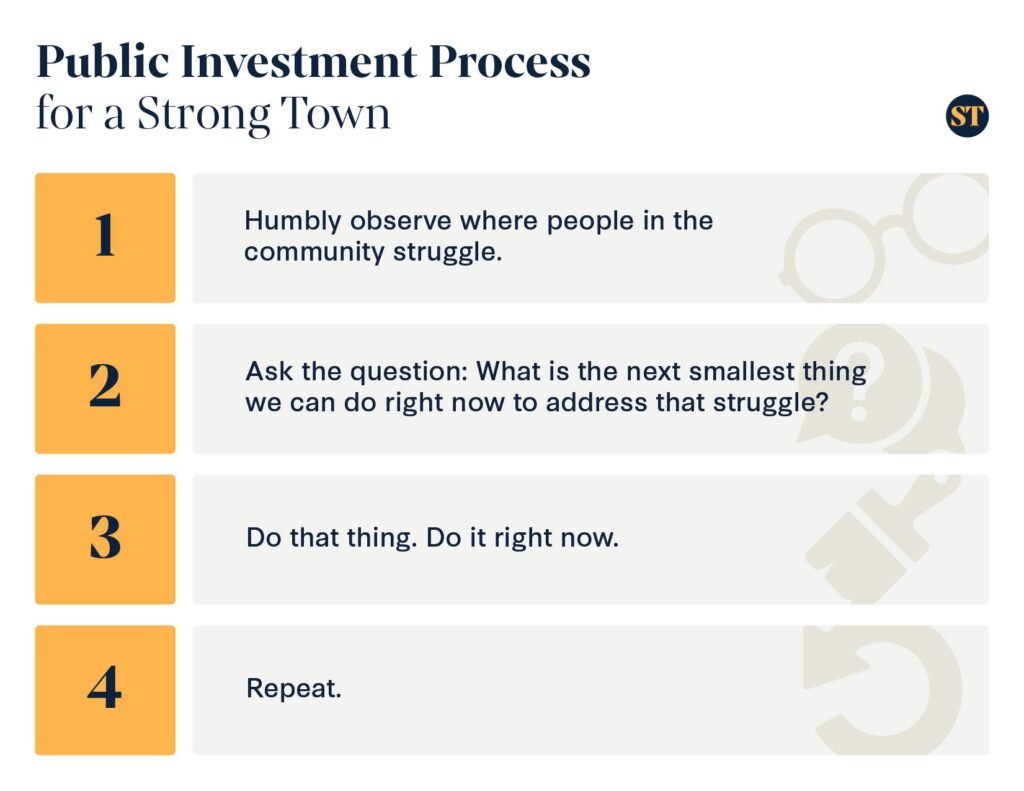
    And this same process can be applied by the municipal government, local entrepreneurs, independent local builders, neighbourhood associations, volunteer groups, and our Strong Towns group itself.

    Action Required

    If we’re serious about creating a vibrant, resilient Kingsville, we need our local government to provide the framework to unleash the untapped creativity and innovative energy within our citizens. That’s the most crucial role it can play today: empowering local entrepreneurs to thrive, instead of perpetuating the Growth Ponzi Scheme where we borrow endlessly from our future to cover yesterday’s debts. By committing to Economic Gardening, we can cultivate a prosperous future that’s truly our own.

    More than words are needed on this front. Drawing from the flexible, entrepreneur-friendly spaces you encounter throughout Europe—coworking hubs and pop-up retail spots with short-term leases and affordable rents—we’ve launched a survey to gauge interest and demand right here in Kingsville.

    If you’re an entrepreneur, remote worker, or freelancer, your feedback will help us develop these kinds of facilities to make starting a business more accessible. Please take a few minutes to fill out the survey—together, we can turn these ideas into reality.

    I’d love to hear your perspectives on all this. Feel free to reply directly or join us at our next meetup to brainstorm how we can push these changes forward in Kingsville.

    Chad Nantais
    Local Leader – Strong Towns Kingsville
  • Woodycrest Neighborhood Walkability Audit: Accessibility Challenges in Kingsville

    Woodycrest Neighborhood Walkability Audit: Accessibility Challenges in Kingsville

    Kingsville, Ontario, boasts a large population of seniors, many of whom have retired here from communities with better active transportation networks and stronger accessibility standards under the Accessibility for Ontarians with Disabilities Act (AODA).

    Woodycrest Neighborhood, with its higher-than-average senior residents, should prioritize walkability for health, longevity, and quality of life. Walking reduces stress, promotes physical activity, and fosters community connections—benefits that drew many from stressful, overcrowded cities.

    However, AODA and Canadian Standards Association (CSA) B651 compliance are crucial to ensure safe, inclusive spaces for all, including those with mobility, visual, or age-related challenges. Non-compliance creates barriers, increases injury risks, and undermines the town’s welcoming appeal. Our July 19th walkability audit of Woodycrest highlights several issues, underscoring the need for improvements.

    Inconsistent Tactile Walking Surface Indicators

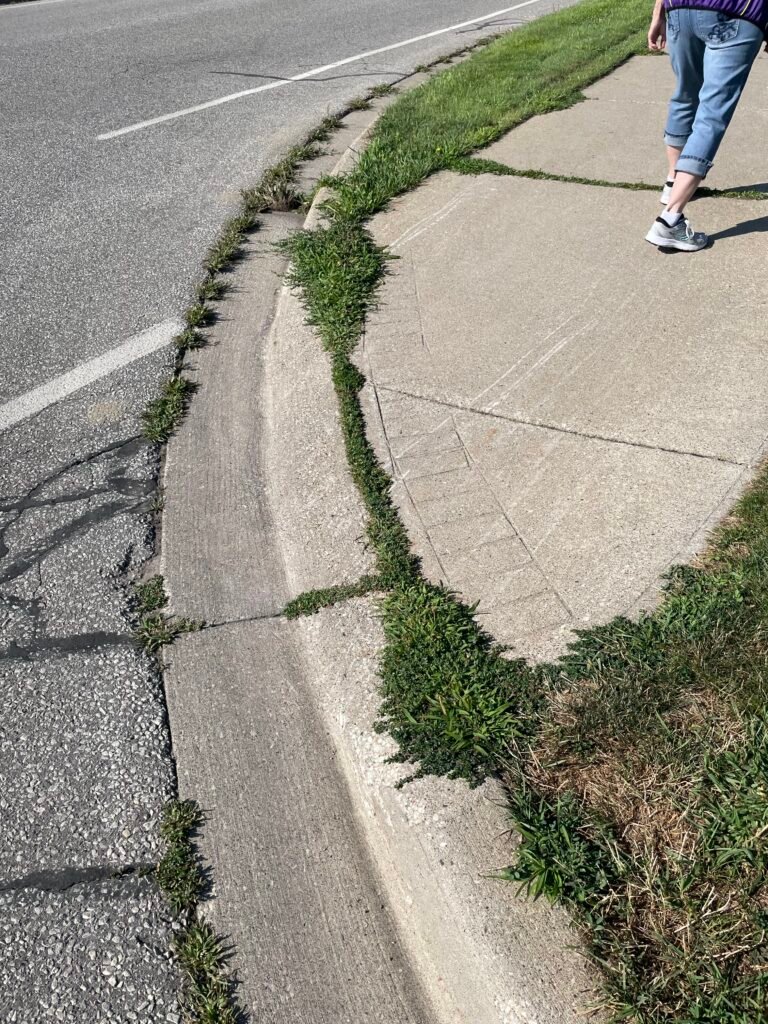
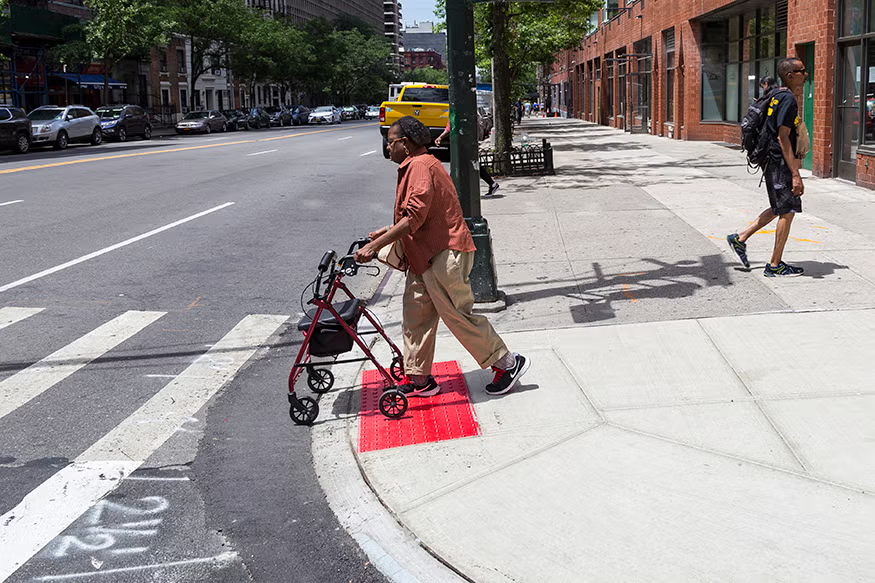
    The audit revealed inconsistent tactile walking surface indicators (TWSIs) at curb ramps, essential for guiding visually impaired pedestrians. AODA and CSA B651 standards mandate truncated domes or bars with specific dimensions, slip resistance, and high tonal contrast. Yet, some ramps featured compliant tactile plates, others relied on non-durable stamped concrete ridges, and many lacked TWSIs entirely. In numerous cases, stamped concrete domes had worn down or were overgrown with vegetation, further reducing detectability.

    These shortcomings violate standards, hinder safe navigation, and pose risks for those with visual impairments. These ramps should be retrofitted with durable, compliant tactile plates (pictured above) to enhance accessibility and inclusivity.

    Narrow and Overgrown Sidewalks

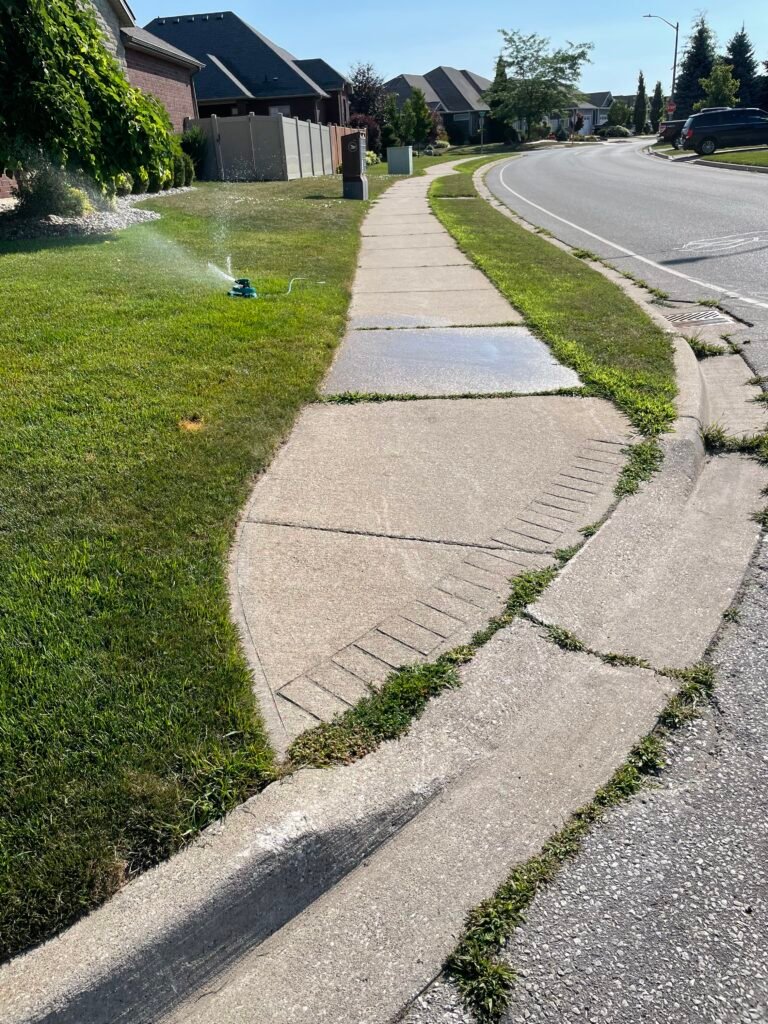
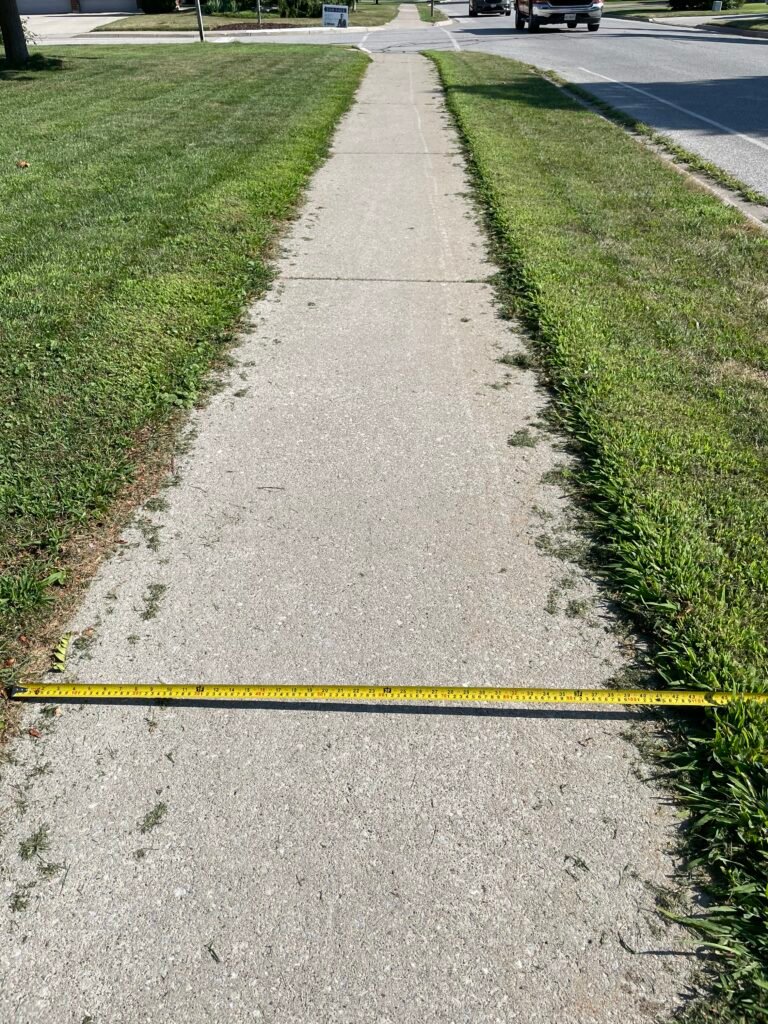
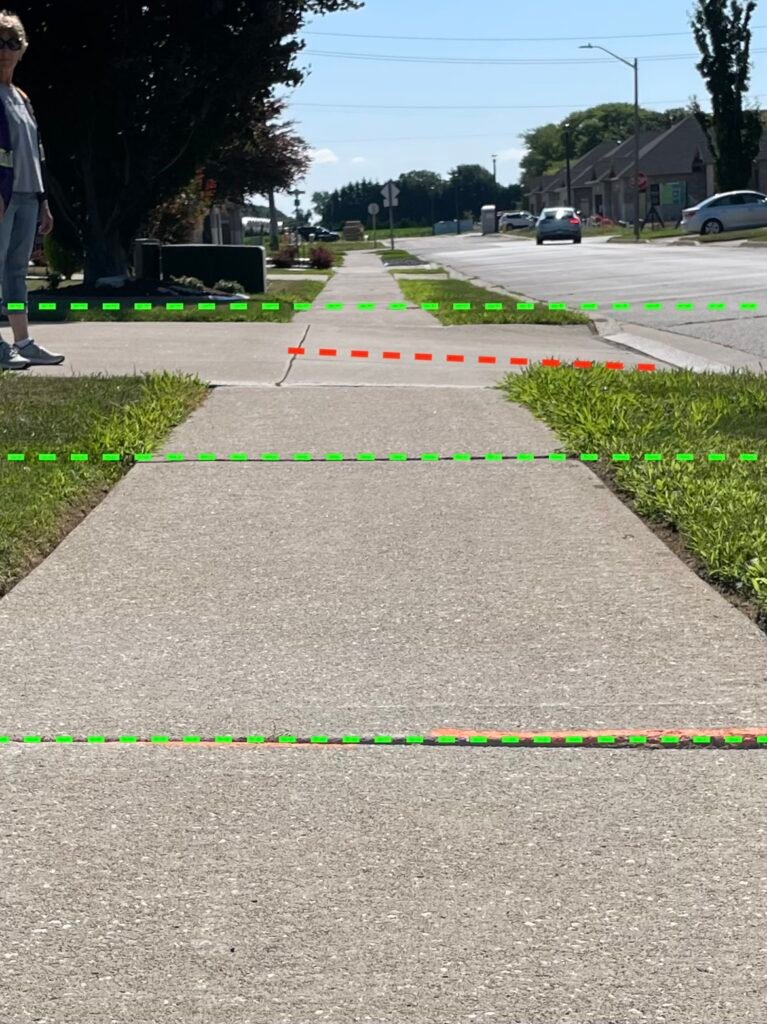
    Narrow sidewalks

    Several sidewalks fell below the AODA and CSA B651-required 1.5-meter (5-foot) minimum width, with some narrowing to under 4 feet due to vegetation overgrowth. These substandard widths and encroaching plants create barriers for wheelchair users and visually impaired pedestrians, violating accessibility guidelines and heightening tripping hazards (many seniors shuffle when they walk).

    To boost safety and inclusivity, the Town should prioritize regular maintenance to clear vegetation, widen paths where feasible, or install passing spaces every 30 meters as per CSA B651.

    Faded or Missing Crosswalk Lines

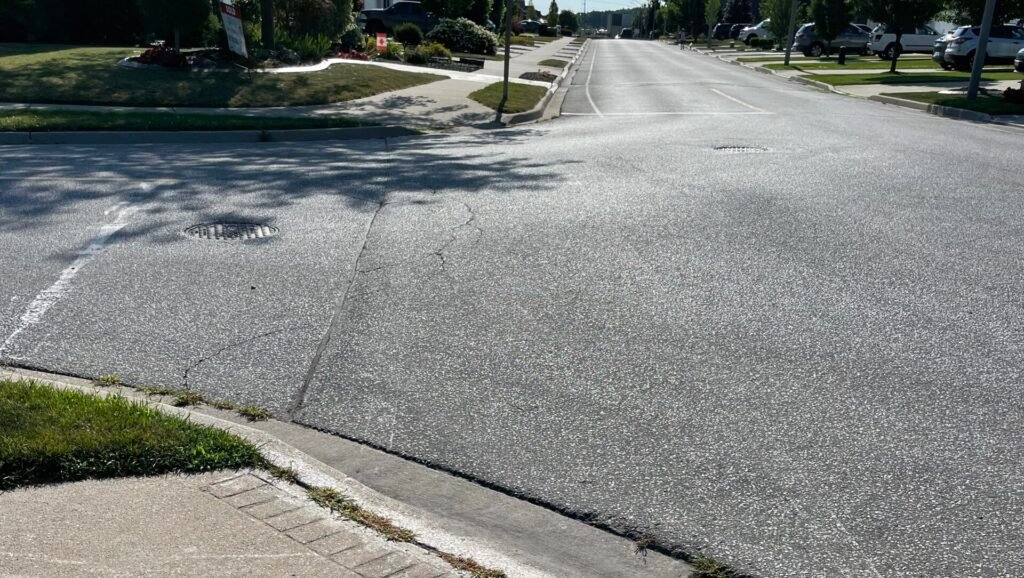
    Sandybrook at Woodycrest

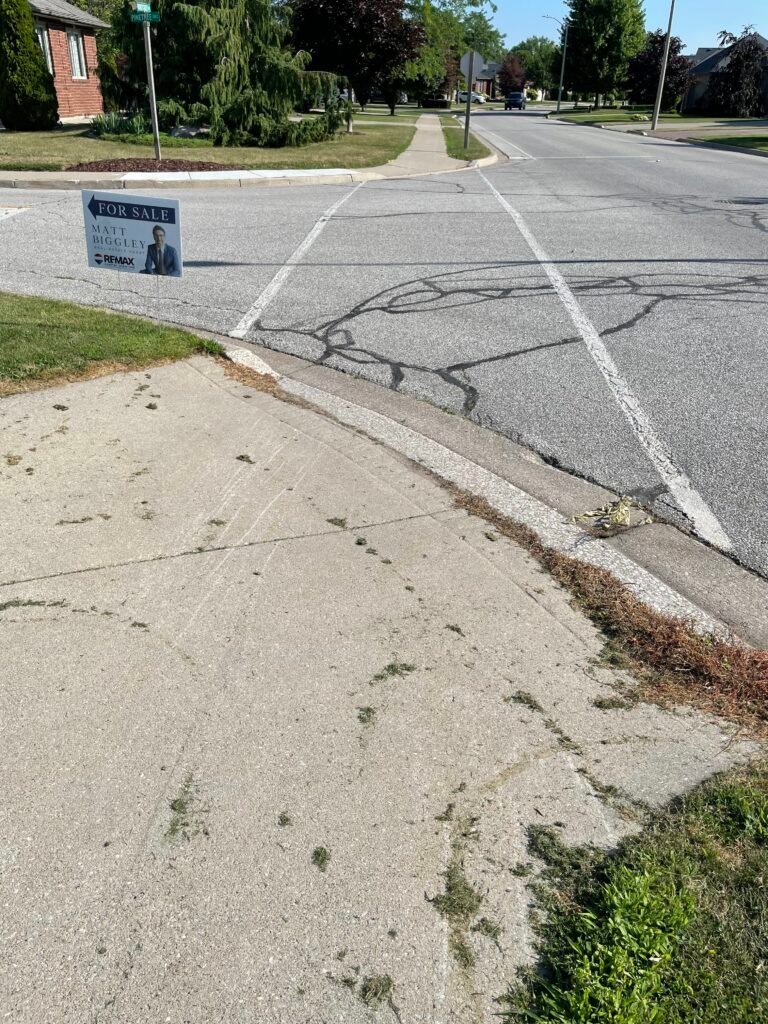
    A few intersections lacked visible crosswalk lines, with markings either absent or faded to near invisibility. This reduces safety for all pedestrians, particularly those with low vision, by obscuring safe crossing points.

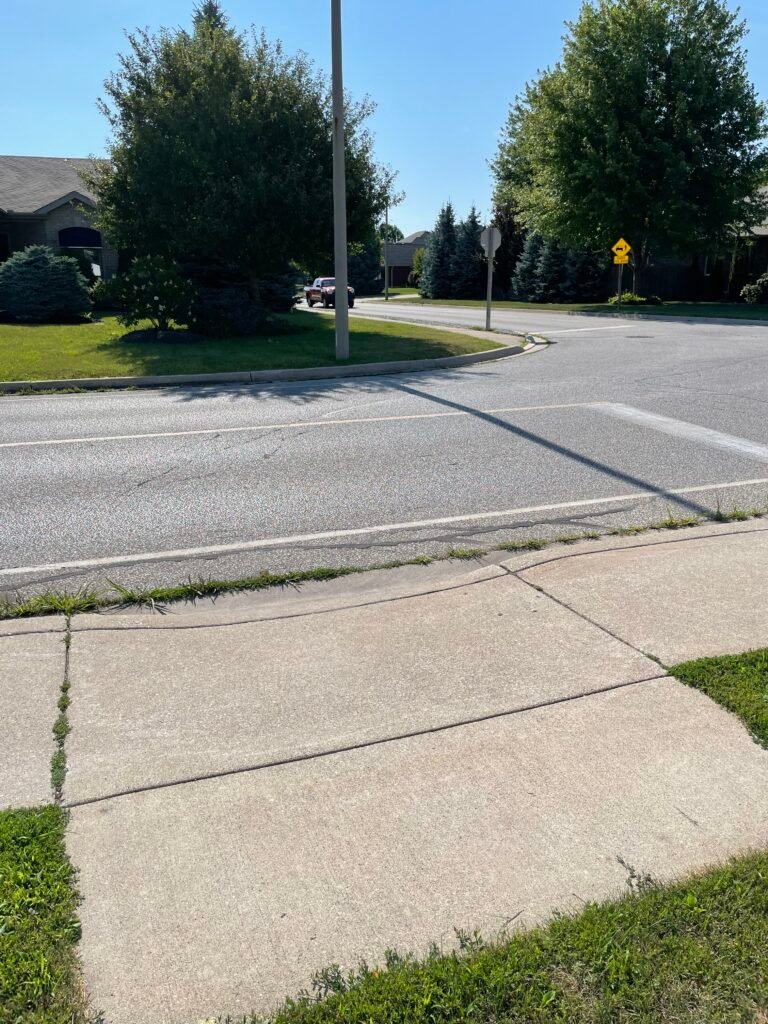
    Confusing Intersection and Traffic Concerns

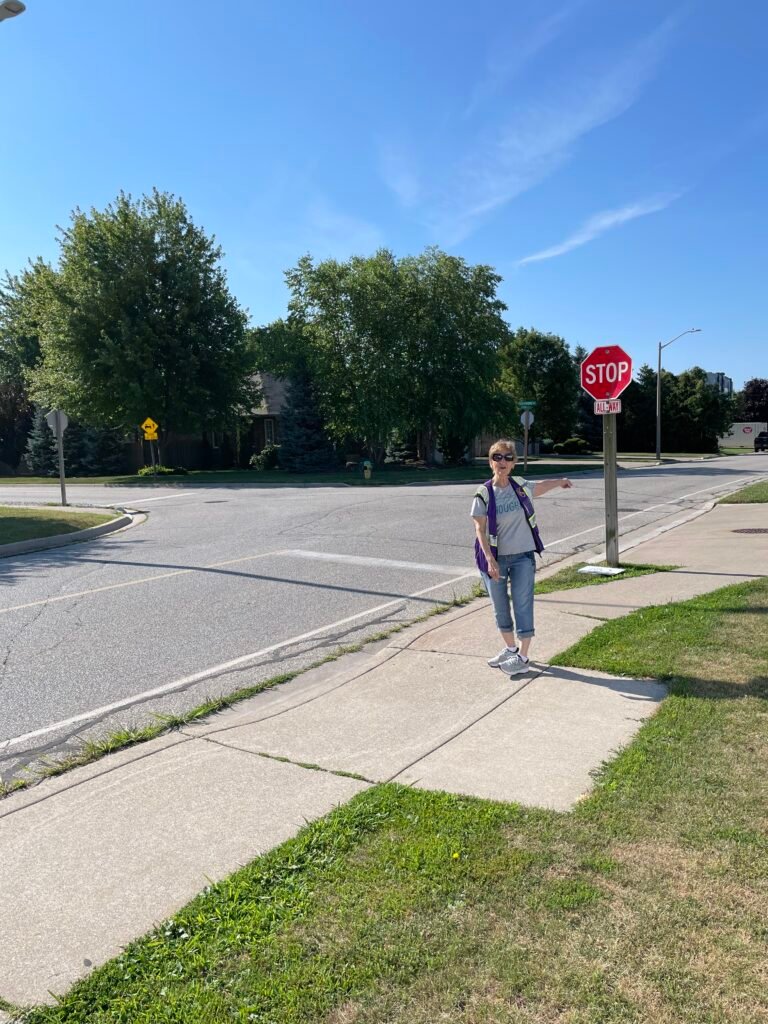
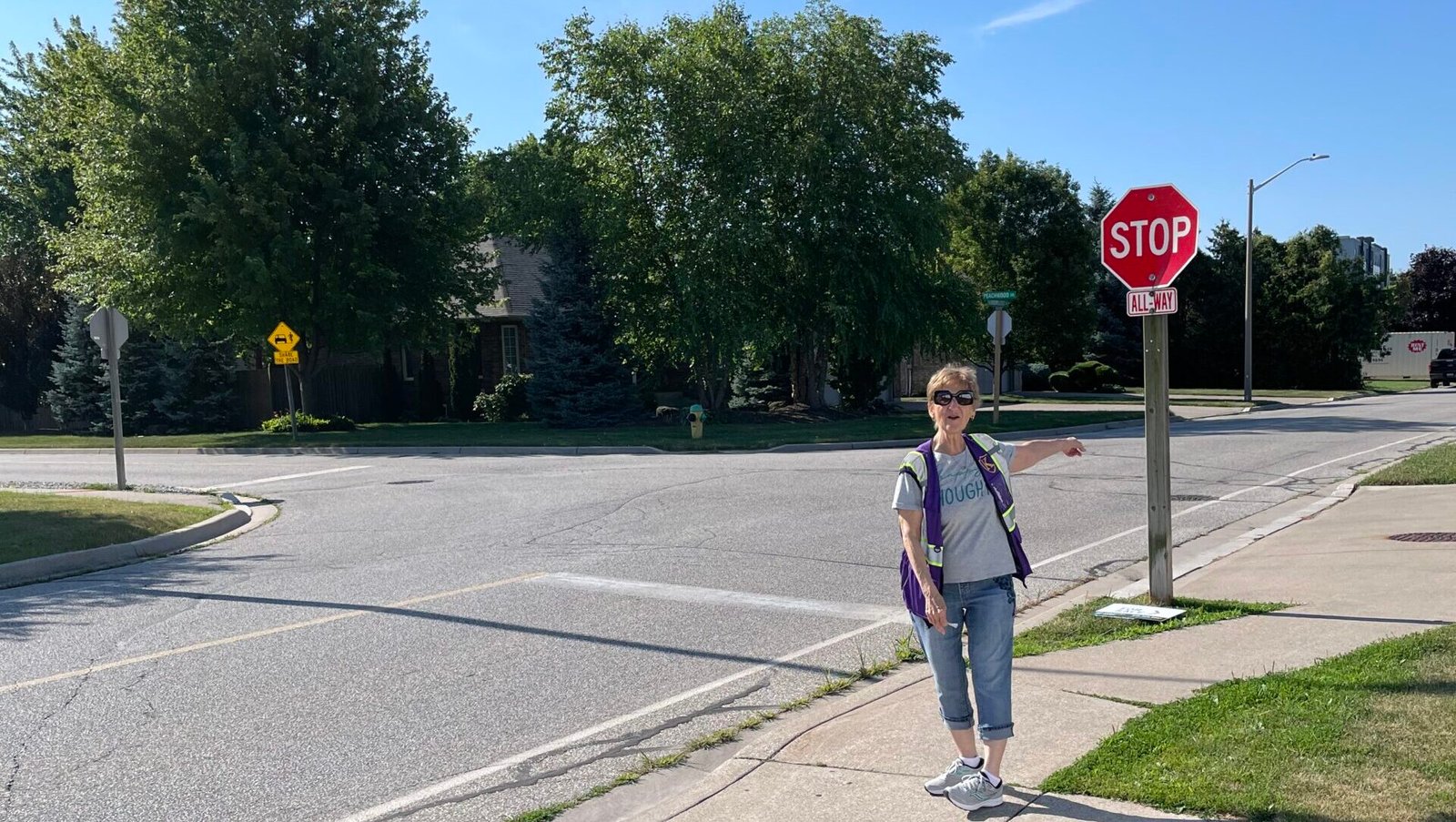
    The Woodycrest and Peachwood intersection exemplifies confusion: a sudden ramp leads nowhere, potentially exposing impaired individuals to oncoming traffic. Without crosswalk indicators or TWSIs, pedestrians must guess where to cross, sometimes toward sidewalk-less areas.

    During documentation, a vehicle rolled through without stopping, highlighting aggressive driving trends. These issues compound risks in a neighborhood meant for safe strolling.

    Excessive Sloping from Driveway Overlays

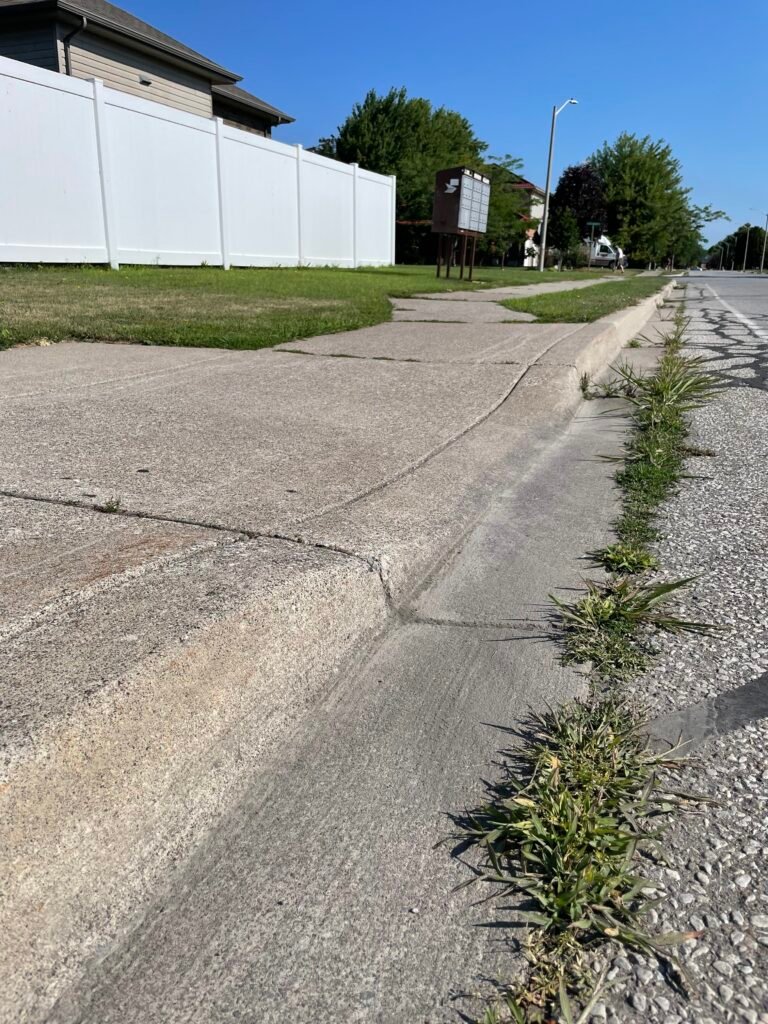
    Driveway sloping

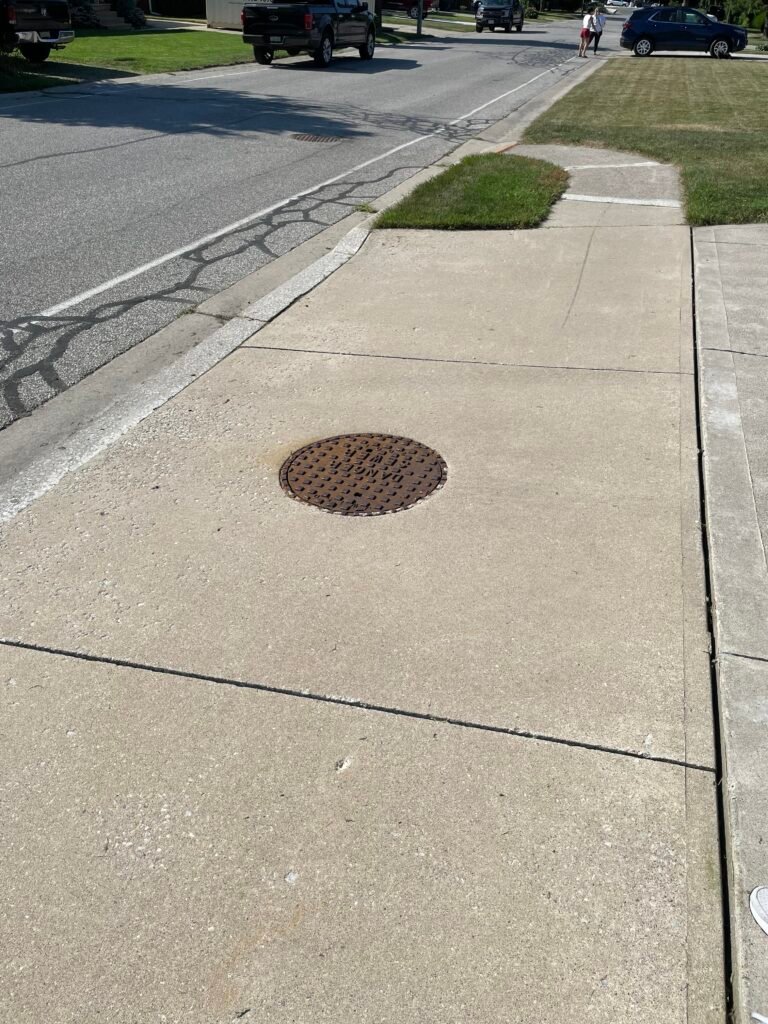
    On Peachwood and on the Eastern side of Jasperson, nearly all sidewalks crossing driveways were overlaid, causing excessive sloping and interruptions to smooth walking or rolling. This breaches AODA and CSA B651 rules for level surfaces with a maximum 2% cross-slope.

    Uneven terrain forces extra effort from wheelchair users, risking instability or tipping, while mobility aid users face higher fall chances. Long-term, perpendicular navigation of slopes can lead to repetitive strain injuries—shoulder and arm overuse for wheelchairs, or knee, hip, and back strain for walkers, as supported by wheelchair ergonomics studies.

    Such alterations may infringe on Kingsville bylaws aligned with the Ontario Building Code, which demand 1.5-meter clear widths and level surfaces. Unauthorized changes could invite fines or enforcement. Solutions include retrofitting crossings for smooth, compliant transitions, plus ongoing maintenance and standards enforcement during construction.

    Lack of Shade and Heat Risks

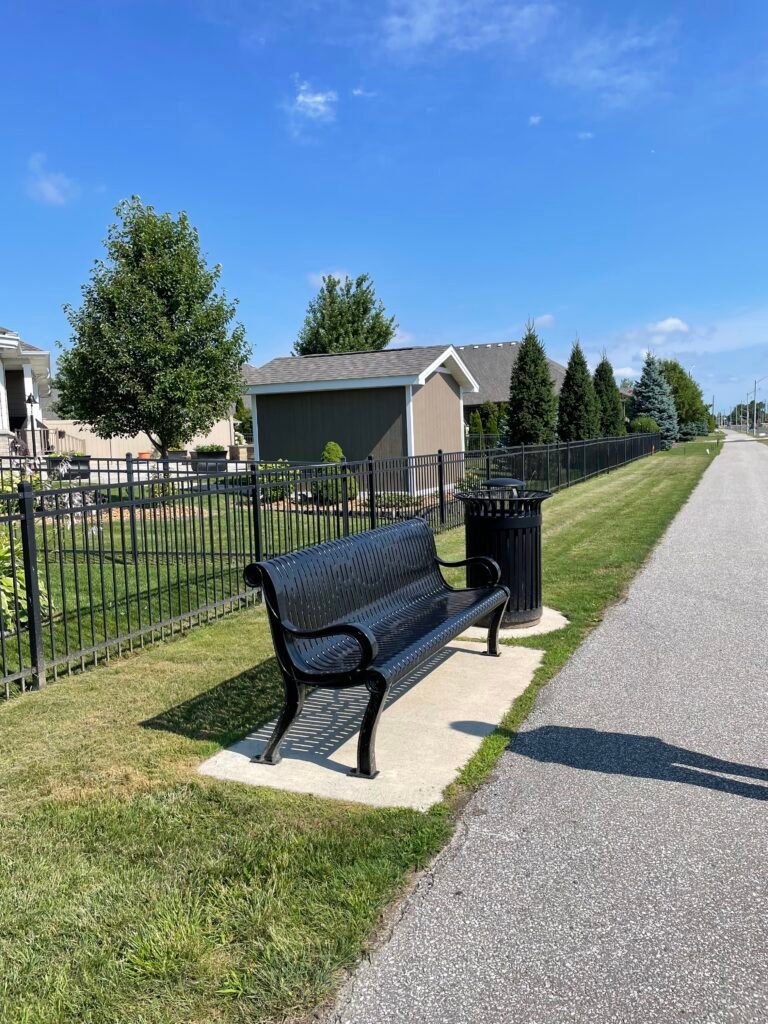
    Rest good, lack of shade bad.

    While Jasperson Lane’s benches every 150 meters are a positive, adding shade would amplify their utility during Kingsville’s heat waves. Elsewhere, sparse street trees left sidewalks unshaded. On a 35°C+ sunny day, radiant heat from asphalt (up to 60–70°C) or concrete (50–65°C) can make near-ground temperatures feel 5–10°C hotter, escalating the heat index to 40–45°C. This intensifies discomfort, dehydration, and heat stress, especially without shade—critical in a senior-heavy area.

    Missed Opportunity: Inaccessible Green Space at Sandybrook and Mulberry

    Potential park at Sandybrook & Mulberry

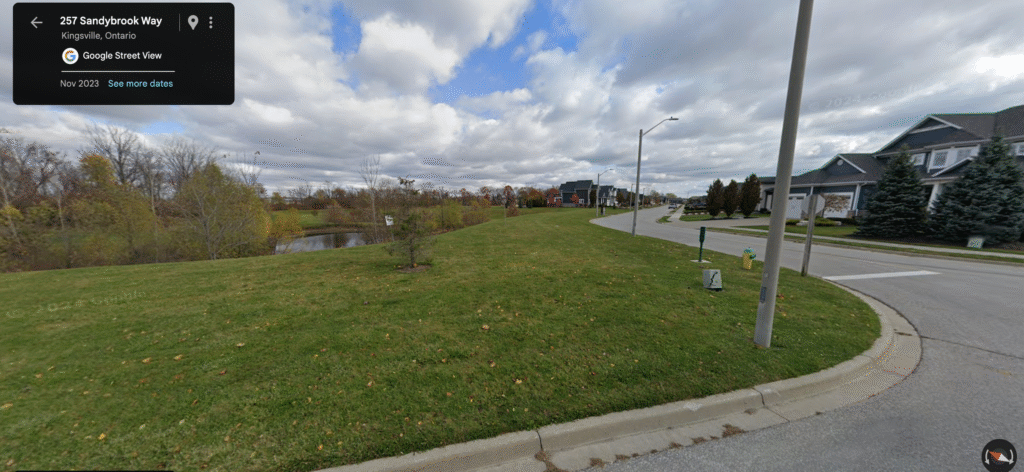
    In the north of the neighborhood, the beautiful green space at Sandybrook and Mulberry features a rolling hill and dense vegetation surrounding a pond, offering potential as a serene retreat.

    Unfortunately, it falls short of AODA Design of Public Spaces Standards for recreational trails and outdoor public spaces. Bounded by a high curb with no sidewalk access, it lacks compliant entry points—curb ramps should provide smooth transitions and adequate widths. The only ramped entry to this space was a narrow one for mailbox access. Additionally, the absence of rest benches works against seniors and those with mobility challenges.

    If redeveloped into a neighborhood park with accessible paths, proper ramps, and benches, this could become one of Kingsville’s nicest green spaces, enhancing community health and enjoyment.

    Insights from Local Walkers

    Unplanned chats with residents underscored these concerns. An early-80s couple praised Woodycrest’s walkability and proximity to stores and downtown, walking twice daily for health. Yet, they occasionaly trip on inconsistent surfaces.

    Another senior avid walker, logging 25,000+ steps daily, worried about sloped sidewalks causing repetitive strain. She also highlighted bikes and e-scooters on sidewalks due to lacking bike spaces, plus rising aggressive driving post-pandemic, endangering pedestrians.

    Conclusion: Toward a More Inclusive Woodycrest

    Despite these flaws, Woodycrest may be Kingsville’s most walkable neighborhood. However, our focus on automobiles has neglected pedestrian needs, especially for those with disabilities, aging issues, or sensory impairments. If we’re inviting seniors to retire here, we must bridge accessibility gaps between their former homes and Kingsville. True inclusivity demands equitable transportation infrastructure for all—let’s close that gap for a healthier, more welcoming community.

    If you’re interested in all the details, here is a map of the observations we made during the audit.

  • Kingsville Coworking & Pop-Up Retail Survey

    Kingsville Coworking & Pop-Up Retail Survey

    Help us shape a new coworking + pop-up retail space in downtown Kingsville, Ontario!

    Your input will guide affordable, flexible workspace and retail options for professionals and entrepreneurs.

    📝 Take our 5-minute survey to tell us:

    • Would you use a coworking space or pop-up booth?
    • How much would you pay?
    • What features matter most (e.g., fast Wi-Fi, affordable booths)?

    Local entrepreneurs are the heart of our economy. Let’s build a vibrant space for them! Share this with friends and join the conversation.

    Data Collection and Privacy Policy

    Privacy Policy for Kingsville Coworking & Pop-Up Retail Survey

    Effective Date: July 31, 2025

    We value your privacy and are committed to protecting your personal information. This Privacy Policy outlines how we collect, use, and safeguard your data when you participate in our survey regarding a potential coworking or pop-up retail space in Kingsville, Ontario.

    Information We Collect

    We collect only the email address you provide when completing the survey.

    How We Use Your Information

    Your email address will be used solely for the following purposes:

    • To contact you if a coworking or pop-up retail space becomes available in Kingsville, Ontario.
    • To notify you if you have won a free day pass as part of the survey incentive.

    Data Retention

    We will retain your email address for no longer than one (1) year from the date of submission. After this period, your email address will be securely deleted from our records.

    Data Sharing

    We will not share, sell, or disclose your email address to any third parties, except as required by law.

    Data Security

    We implement reasonable measures to protect your email address from unauthorized access, use, or disclosure.

    Your Rights

    You may request access to or deletion of your email address at any time by contacting us at info@kingsvillestrong.com. We will respond to your request promptly.

    Contact Us

    If you have any questions or concerns about this Privacy Policy, please contact us at info@kingsvillestrong.com.

    Thank you for participating in our survey!

  • Webinar: What can we as citizens do about traffic in Kingsville?

    Webinar: What can we as citizens do about traffic in Kingsville?

    Kingsville’s small-town feel is what makes it special. But, as our population grows, we’re seeing more traffic through the heart of our town. This is not only changing the character of our streets but also making them less safe for pedestrians and cyclists—especially kids, seniors and people with disabilities.


    This 1-hour session presented by Strong Towns Kingsville explores practical ways to preserve Kingsville’s charm while ensuring our streets remain safe and welcoming for everyone.
    Essex County Transportation Masterplan: https://kingsvillestrong.com/transportation-master-plan/

    Recorded July 15, 2025

  • Essex County Transportation Master Plan

    Essex County Transportation Master Plan

    We can’t afford to keep increasing vehicle traffic for another 30 years. Act now—support Alternative #3 in the Essex County Transportation Master Plan for development of multi-modal networks that integrate walking, biking, and transit. It will define our mobility for the next two generations.

    Take action to support multi-modal transportation infrastructure for Essex County.

    The deadline to submit your comments is July 31, 2025.

    Step 1

    Learn about the Transportation Master Plan study that is in progress at: https://www.countyofessex.ca/TransportationMasterPlan/

    Step 2

    Send your support for “Alternative #3” to the Consultant Project Manager and the Manager for Transportation Planning and Development using the contact details below.

    Anything short of Alternative #3 will leave Essex County dependent on cars for the next 50 years, while the rest of the world moves on to multi-modal transportation (walk, ride, bus, rail).

    Send your comments to these contacts:

    Jerry Behl, P. Eng., PMP, PTOE, RSP1
    Manager, Transportation Planning and Development
    County of Essex
    360 Fairview Avenue West, Suite 315
    Essex, ON
    N8M 1Y6
    519-776-6441 ext. 1316
    JBehl@countyofessex.ca

    Alvaro L. Almuina, P. Eng., M. Eng., PMP, DCE
    Consultant Project Manager
    R.J. Burnside and Associates Limited
    128 Wellington Street West Suite 301
    Barrie, ON
    L4N 8J6
    1-800-265-9662 ext. 4383
    Alvaro.Almuina@rjburnside.com

  • Is Kingsville Growing or Just Getting Bigger?

    Is Kingsville Growing or Just Getting Bigger?

    What’s Inside:

    • The Hidden Costs: How new developments can strain our roads and wallets.
    • Growth for Whom?: Why some residents are left behind as the town expands.
    • Building to Last: Why we need to fix what we have before chasing more.
    • Your Role: How you can help shape a Kingsville that works for everyone.

    Join our Webinar: Solving Kingsville’s Traffic Challenges

    As Kingsville grows, traffic is reshaping our community. Concerned? Join us for actionable solutions!

    Free Live Webinar: July 15, 2025, at 7:00 PM EDT

    Topic: “What Can We as Citizens Do About Traffic in Kingsville?”

    Learn how growth affects traffic, explore ways to keep streets calm and walkable, and get involved in our town’s future.

    Spots are limited—reserve yours now!

    Population growth is often celebrated as a sign of success. More people moving to a town can feel like validation—a signal that the community is vibrant and on the rise. But is that always the case? Not necessarily. In fact, population growth can sometimes mask deeper issues, leaving towns financially strained and unprepared for the future.

    In Kingsville, we’re seeing this firsthand. Our population is growing, but is our town truly thriving? Let’s explore what it really means for a community to succeed—and why growth alone isn’t the answer.

    The Growth Myth: Bigger Isn’t Always Better

    It’s easy to assume that a growing population means a town is flourishing. After all, more residents can bring fresh energy and a sense of momentum. But as Paul Gottlieb points out in his article, “Population Growth Means a City Is Thriving, or Does It?,” this assumption can be misleading.

    Charles Marohn, founder of Strong Towns, takes it a step further, calling unchecked expansion a “growth Ponzi scheme.” Here’s how it works: towns chase new development for quick revenue—think permit fees and property taxes—but fail to account for the long-term costs. New roads, utilities, and services are expensive to maintain, and when the initial boom fades, towns are left with infrastructure they can’t afford. It’s a cycle that prioritizes short-term gains over lasting stability.

    In Kingsville, we’re witnessing this pattern. New neighborhoods are sprawling further from downtown, but are we planning for the long haul? Or are we setting ourselves up for a future of budget shortfalls and crumbling infrastructure?

    The Hidden Costs of Growth

    Population growth doesn’t just strain finances—it puts pressure on every part of a community. More people mean more demand on roads, schools, water systems, and public services. Without careful planning, these costs can spiral out of control.

    Are we growing in a way that we can sustain 20, 50, or even 100 years from now?

    Consider this: a town might build a new subdivision to accommodate 500 new residents. The initial tax revenue looks great, but over time, the cost of maintaining the expanded infrastructure—think road repairs, sewer lines, and emergency services—can outweigh the benefits. In Kingsville, this isn’t just a hypothetical. We’re already grappling with a $4-million infrastructure deficit, meaning we’re falling behind on keeping our town functional. The recent $7.4 million in provincial funding for housing infrastructure helps ease the burden, but it’s a temporary fix—not a sustainable solution. Suddenly, the town is bigger, but not better.

    In Kingsville, we need to ask ourselves: Are we growing in a way that we can sustain 20, 50, or even 100 years from now? Or are we chasing numbers without considering the long-term impact?

    Growth Doesn’t Guarantee Prosperity for All

    Another misconception is that population growth automatically leads to shared prosperity. But as Gottlieb’s article highlights, that’s not always true. Take Chicago, for example: the city has lost population in recent years, yet its overall wealth has increased. This shows that a town’s success isn’t tied to headcount alone.

    In Kingsville, we must ensure that growth benefits everyone, not just a select few. National trends show income inequality at record highs, with the gap between the wealthy and the rest widening every year. As our town expands, are new jobs accessible to residents? Are housing options affordable for all income levels? If growth only lifts some while leaving others behind, it’s not true prosperity—it’s inequality in disguise.

    What Does a Thriving Town Really Look Like?

    So, if population growth isn’t the ultimate measure of success, what is? Here are three key pillars to consider:

    1. Sustainability

    A thriving town builds for the future, not just the present. That means investing in infrastructure that’s efficient, maintainable, and adaptable. It means lots of grassroots businesses created by locals, for locals. It also means protecting natural resources and planning for environmental challenges. In Kingsville, are we making choices that our grandchildren will thank us for?

    2. Equity

    True success means opportunity for all. A town can’t thrive if only some residents or outside investors reap the rewards of growth. We need policies that promote fair access to jobs, housing, education, and public spaces. Are we creating a Kingsville where everyone has a chance to succeed?

    3. Resilience

    A strong town can weather storms—both literal and figurative. That means having a diverse economy and a community that supports one another. Can Kingsville handle economic downturns or disasters without relying on endless expansion or handouts from the Province?

    Are we making choices that our grandchildren will thank us for?

    Let’s Build a Kingsville That Truly Thrives

    Growth isn’t inherently bad—it’s how we manage it that matters. In Kingsville, we have an opportunity to grow smarter, not just bigger. That starts with asking tough questions and making intentional choices.

    Here are a few ways we can start:

    • Prioritize maintenance over expansion. Before building new, let’s care for and reuse what we already have. We don’t have to sacrifice more good farmland or forests.
    • Invest in walkable, mixed-use neighborhoods. These designs reduce infrastructure costs and foster community. When we build things closer together, we don’t have to drive so far.
    • Promote inclusive growth. Ensure that new developments include affordable housing and accessible public spaces.

    We need your voice—whether you’re a community leader or a citizen who cares. What does a thriving Kingsville look like to you? How can we grow in a way that benefits everyone?

    Join the conversation: Take action on Kingsville’s traffic

    As our town expands, so do the challenges—like increased traffic that’s changing the heart of our community. If you’re concerned about what this means for Kingsville’s future, we have solutions.

    Join us for a free, live webinar on July 15, 2025, at 7:00 PM EDT“What can we as citizens do about traffic in Kingsville?” 

    You’ll learn practical ways to preserve our town’s charm and make our streets safer for everyone—no matter how much we grow.

    • Discover how growth impacts traffic and what we can do about it
    • Explore simple solutions to keep Kingsville’s streets calm, walkable and bike-friendly
    • Ask your questions and get involved in shaping our town’s future

    Reserve your spot in the July 15th webinar!

    Spots are limited—don’t miss out!

    Chad Nantais
    Local Leader
    Strong Towns Kingsville


    Related:

  • A great start at our first Meetup – Here’s what’s next

    A great start at our first Meetup – Here’s what’s next

    Our first Meetup took place last night at the Banded Goose on Main Street. It was both eye-opening and encouraging, thanks to one of our Town Council members.

    Highlights 

    We were honored to have Councillor Thomas Neufeld join us. He was incredibly supportive of our Strong Towns ideas and shared practical insights that helped us see how these concepts can take root in Kingsville. 

    We also received feedback from a subscriber who recently retired to Kingsville from Waterloo. This sparked an important realization: our new citizens are a goldmine of experience. Many come from places with better transportation, housing, and downtowns. They already see Kingsville’s shortcomings and know what “better” looks like. We need to tap into their insights to help shape our town.

    Key Takeaways

    Councillor Neufeld’s input crystallized a core truth for us:
    Strong Towns are built on Strong Neighborhoods. 
    Strong Neighborhoods are built by Engaged Citizens.

    To make this happen, we’re focusing on two key groups:

    1. New Citizens
      Retirees and others moving here from more cultivated urban areas bring a wealth of knowledge. Their perspective is critical to improving Kingsville, and we’re committed to giving them a platform for influence.
    2. Youth
      We can’t let our young people get bored and leave (like I did after high school). They’re a vital source of energy and ideas. We saw their potential during the school naming process, proving they can be engaged citizens. We need to harness their power to reach Kingsville’s potential.

    Where We’re Starting

    We also recognized that our community is still healing from the COVID era’s challenges. Right now, we’re focusing on those eager to jump in, rather than trying to convince skeptics or those busy with family life. By building momentum with a passionate core, we’ll grow from there.

    Vision for a Cohesive Community

    Picture this: a town where seniors and youth work together. Seniors bring wisdom and guidance; youth bring energy and fresh ideas. It’s a powerful combination that could give our seniors a meaningful role in our “village” while inspiring the next generation. I’m reminded of when my grandparents’ boiler burnt down mid-winter, and the community rallied to rebuild it so they wouldn’t lose their crop. That’s the Kingsville we can rebuild—together.

    Get Involved

    This is where you come in. Whether you’re:

    • new citizen with fresh ideas,
    • young person with enthusiasm,
    • Or a long-time resident with deep roots,

    Your voice matters. Let’s build a Strong Town, step by step, starting with engaged citizens like you. If nothing else, just start talking about Strong Towns. Share this post with one person who cares about Kingsville.

    Thank you for your support. I can’t wait to see you at our next Meetup!

    –Chad